


Most movers know who they compete with on the job. Fewer know who they compete with on Google, and those are often different companies. Competitive SEO analysis is the habit of studying the sites, listings, links and ads that win the searches you want, then changing your own pages to close the gap. It turns your SEO for movers plan from guesswork into an ordered to-do list. Movers Development works with 400+ moving companies across the US, Canada, and other countries, and the framework below is how we compare a mover with its search competitors.
What should a competitor SEO analysis cover?
Eight checks cover most of what a mover can learn from competitors. Each row ends with the change you make on your own site, so the research never stays in a spreadsheet.
| What you analyze | Where you look | What you look for | What you change |
|---|---|---|---|
| Real SEO competitors | Incognito Google results for your main service and city searches; competitor reports in Semrush or Ahrefs | Domains that keep appearing, including directories and lead marketplaces that are not movers | Build a short benchmark list; drop rivals you cannot beat yet |
| Keyword gap | Keyword gap report in Semrush or Ahrefs; your queries in Google Search Console | Service, city and “near me” terms they rank for and you do not; terms where you sit on page two | Add or expand service and city pages; rewrite titles for page-two terms |
| On-page SEO | Their top service pages: title, headings, page source | Title and heading patterns, page length, FAQs, reviews on the page, quote form placement | Restructure your service pages; add the sections you lack |
| Backlinks | Backlink gap report in Semrush or Ahrefs | Local directories, associations, real estate and home-service partners, community sites that link to them and not to you | Build an outreach list for the same types of links |
| Local pack and Google Business Profile | Google Maps and the local pack, searched from the areas you serve | Primary category, review count and recency, photos, services, posts, owner replies | Fix categories and services; request reviews on a schedule; add photos |
| Paid ads | Google Ads Transparency Center, SpyFu, live results in peak season | Keywords they bid on, ad copy, landing pages, how ads change when demand rises | Test new ad copy; fix your landing page where theirs is stronger |
| Pricing and offer | Their site and quote form, opened on a phone | Free estimate or online quote, how prices are shown, guarantees, services you see nowhere else | Sharpen your offer and state what you do differently |
| Site experience | Their quote flow and mobile pages; PageSpeed Insights for both sites | Steps to get a quote, tap-to-call, mobile load time | Shorten your quote form; fix slow pages |
You do not need equal time on every row. If rankings are the problem, start with the first four. If rankings are fine but calls are weak, start with the local pack, the offer and the quote flow.
How do you run a competitive SEO analysis for your moving company?
Work through the research in order. The first steps decide where you spend your time, and the later ones decide what you build.
Who are your real SEO competitors?
Your SEO competitors are the sites that rank for the keywords you want, not necessarily the movers you meet on jobs. Search your main phrases, such as “local movers,” “long distance movers” and “moving services” plus your city, and note every domain on the first two pages. Direct competitors share your service area, pricing and service types. Indirect ones, like lead marketplaces and directories, often outrank local movers for the same searches, so they belong on the list even though a better crew will not beat them.

Then cut the list to the companies you can realistically overtake. Compare domain strength, backlink profile, indexed pages, business listings, current rankings and estimated traffic. A competitor with far more authority than you is a long-term target. One with fewer links and thinner pages is your opening. Start with the weaker rivals and work up as your own pages gain ground.
Which keywords can you realistically win?
Export the keywords your competitors rank for and compare them with your own. The gaps fall into three groups: terms you do not target at all, terms where you rank on page two, and terms where a competitor’s page answers the intent better than yours. Page-two terms usually come first, because they need a stronger page rather than a new one. In Search Console, filter queries by average position to find them.
Content gap tools and TF-IDF analysis show which related terms top-ranking pages use that yours lack. For example, pages that rank for “cardboard moving boxes” tend to cover box types and sizes, packing supplies and packing techniques. Skip keywords that need big budgets and years of authority; a smaller mover wins by choosing realistic targets. Our guide to moving company keywords is a good starting point for what to build pages around.

What do competitors’ pages do better than yours?
Open their strongest pages for local moves, long distance moves, packing and storage, and read them first as a customer, then as a crawler. Record what you see:
- Title and meta description formats
- Heading structure and where the main keyword appears
- Word count, lists, bold text and image quality
- Internal links between service, city and blog pages
- Landing page elements: calls to action, forms, review blocks and FAQs
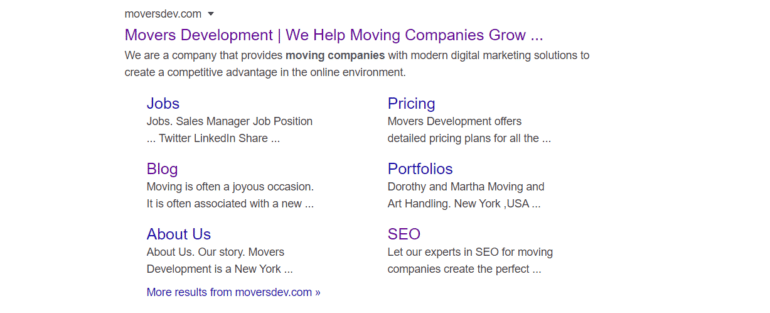
The goal is to find sections your page is missing, not to match their word count. Take the structural idea and write it in your own words with your own details.
Which backlinks do they have that you do not?
Run a backlink gap report with your domain and a few competitors, then list the sites that link to them but not to you. Look for local directories, real estate partners, community blogs and home improvement sites, because these send strong local signals. Each domain is a target for outreach, and the pattern shows which kinds of links work in your market. Our breakdown of backlink tactics for moving companies covers how to earn them.
What should you compare in the local pack and on Google Business Profile?
For a mover, the map results above the organic listings often decide who gets the call. Search your main service plus your city from several neighborhoods you serve, because results shift with location, and note which companies appear in the map pack. Then open each profile and compare the primary category, additional categories, services, review count, how recent the newest reviews are, owner replies, photos and posts.
Google says local results are ranked mainly on relevance, distance and prominence, as described in Google’s explanation of local ranking factors. You cannot change distance, but you control how complete your profile is and how steadily reviews come in. If your profile trails the ones in the pack, our Google Business Profile and reputation management work fixes exactly that, and our guide on how to rank in Google Maps covers the local SEO side in depth.
How do you check competitor ads, pricing and offers?
Use the Google Ads Transparency Center to see ads a competitor is running, and a tool like SpyFu to see which keywords they bid on. Compare their ad copy, their landing pages and how both change in busy moving season. Spend estimates from these tools are directional, so treat them as a hint rather than a budget. If a rival outspends you, match them on quality, not on cash: sharper ad copy, tighter targeting by city and a landing page that fits the search. Our PPC for moving companies service builds exactly that, and your cost per lead and quote requests from paid traffic are among the marketing KPIs for moving companies to review monthly.
Then check the offer as a customer would, on a phone. Do they promise a free estimate, an online quote or a calculator? How do they show prices? A calculator gives a visitor an easy first step, while a long price list can feel confusing or intimidating. If competitors rely on lists, an instant moving quote calculator is a way to stand apart.
What else belongs in a digital marketing competitor analysis?
SEO is one channel. Competitor analysis in digital marketing also covers social media, email and the website itself.
Social media. Note which networks competitors use, how often they post, which content earns engagement and how they reply to comments and reviews. Different audiences favor different platforms, so see where a rival’s engagement actually shows up before you pick yours. The results feed into your movers advertising mix.
Email. Customers hire movers rarely, so email keeps your name in front of them between moves. Subscribe to competitors’ lists and note targeting, messaging and frequency. Even a weak campaign shows what to avoid.
Website. Compare layout, quote forms, mobile design and speed. A slow or confusing site loses visitors before SEO can help, so this check belongs in any website design for moving companies review.
How do you turn competitor insights into site changes?
Rank what you found by what costs you leads first:
- Fix lead blockers: a long quote form, no tap-to-call, a thin Google Business Profile.
- Close page-two keyword gaps with stronger service and city pages.
- Rework your top service pages using the sections you found missing.
- Start outreach to sites that link to several competitors.
- Test your ad copy and landing pages against the ads you found.

Also look for what competitors do not emphasize. If few mention special handling of delicate or valuable items, or eco-friendly moving practices, and you do those well, give each a clear section with matching keywords and a plain explanation of the service. Do not copy what works for them. Adapt it to your own customers, and let an SEO strategy for moving companies decide which pages to build first.
How do you stay ahead of competitors over time?
Rankings, profiles and ads keep moving, so one analysis is a snapshot. The movers who stay ahead build a few habits:
- Ask customers what they want through surveys, follow-ups and reviews, and share the answers with your crew.
- Check competitors on a schedule instead of when you feel behind.
- Keep up with software for accounting, marketing and customer relations so your tools do not limit you.
- Write the plan down: what the team checks monthly, quarterly and yearly.
- Ask an outsider to review your site and profile, since you are too close to see the gaps.

A practical rhythm is a monthly check of rankings and your Google Business Profile, a quarterly rerun of the keyword gap and ad checks, and a full review once a year. Use Search Console to confirm that page-two queries move up after your changes, and use a tool like Semrush or Ahrefs to track backlinks and keyword shifts. Our guide to the SEO metrics Google uses explains which numbers matter, and how to measure GBP performance covers the local side. Also adjust keywords and content around seasonal search patterns.
Should you do competitor analysis in-house or hire experts?
Do part of it yourself. Free and low-cost tools handle the competitor list, search result checks and profile comparisons, and doing them teaches you your market. Hire help when the work spreads across several cities, needs paid tool data or competes with running the company. Experts bring experience, specialized tools and an outside view, which matters because owners and staff are rarely objective about their own site. If you do hire, learn how to recognize bad SEO companies first.
Turn competitor insights into booked jobs
Competitive SEO analysis pays off only when findings become changes to your pages, profile and ads. Movers Development works only with moving companies, so we know which competitors, keywords and local signals matter in this industry. Request a free marketing analysis and we will compare your site, Google Business Profile and ads with the companies that rank in your market, then give you a plan of action. You can also contact our team with questions.
Frequently Asked Questions
What is competitive SEO analysis?
Competitive SEO analysis is the process of studying the companies that rank for the searches you want, then using what you learn to improve your own site. For a moving company, that means comparing competitors' keywords, page structure, backlinks, Google Business Profile, ads and offer with yours, and turning each gap into a specific change on your pages, profile or campaigns.
What is competitor analysis in digital marketing?
Competitor analysis in digital marketing is a review of how rival companies attract customers across channels: organic search, Google Business Profile, paid ads, social media, email and their website experience. For movers, it shows which keywords, offers and platforms bring leads to others, so you can copy the approach where it fits your audience and avoid the mistakes you see.
How do you identify your SEO competitors?
Search your main keywords, such as local movers or long distance movers plus your city, in an incognito window and list every domain on the first two pages. Add the companies in the Google Maps pack and use the competitor report in Semrush or Ahrefs to confirm. Your SEO competitors may include directories and lead marketplaces, not only moving companies.
How do you stay ahead of competitors in your industry?
Check competitors on a schedule: rankings and your Google Business Profile monthly, keyword gaps and ads quarterly, and a full review yearly. Ask customers what they want, keep up with new software, write the plan down and have an outsider review your site. Staying ahead means noticing changes early and acting on them, not reacting once leads drop.
How can you get ahead of the competition quickly?
The fastest gains are usually fixing a thin Google Business Profile, shortening your quote form, and rewriting titles and content for terms where you already rank on page two. These changes need no new authority. Link building and new service pages take longer, typically weeks to months before rankings move, so start them early.
Why is it essential to stay ahead of the competition?
Moving is a competitive local market where customers often compare several companies before calling one. If a rival has a stronger Google Business Profile, a clearer offer or a faster quote form, they get the call even when your service is better. Staying ahead protects your share of those searches and keeps your cost per lead from rising.
How do you find the backlinks your competitors have?
Enter your domain and two or three competitors in the backlink gap report of Semrush or Ahrefs. The result lists the sites that link to them but not to you. Focus on local directories, associations, real estate and home-service partners and community sites, then reach out with a reason to link, such as a useful resource or a local partnership.
What does a competitive SEO analysis example look like for a moving company?
Imagine a competitor ranks for a long distance service page and you do not. You find their page has a quote form above the fold, FAQs and reviews, while yours has a short text block. You add a service page with those sections, retitle it for the same search, and earn links from sites that link to them.


