



Advertising a moving company comes down to three decisions: which channels you pay for, how much you spend on each, and how you prove which booked moves came from which dollar. In our work with 400+ moving companies across the US, Canada, and other countries, the gap is rarely a missing channel. It is that nobody tied the channels to booked jobs. Below you will find the planning steps, then 14 different ways to advertise your moving business, compared by who each one suits, what it costs, and how fast it works. If you would rather have all of it run as one system, see our digital marketing for moving companies.
14 Ways to Advertise a Moving Company at a Glance
Use this table to shortlist channels before you read the detail. Cost levels are relative to each other, and the time to results is a typical range, not a guarantee. Your market, season, and starting point change both.
| Channel | Best for | Cost level | Typical time to results | Movers Development comment |
|---|---|---|---|---|
| Website + instant quote calculator | Every mover | Medium upfront, low ongoing | Works from launch day | Fix this first; every other channel lands here |
| Local SEO + content | Movers staying in a market for years | Medium, ongoing | Typically 3–6 months, longer in big metros | Lowest cost per lead over time, slowest start |
| Google Business Profile, reviews, citations | Local and residential movers | Low | Typically 1–3 months | Drives Maps calls; reviews feed every other channel |
| Google Ads (search PPC) | Movers who need calls now or are entering a new area | High | Same day once ads are approved | Fastest tap to open; stops when the budget stops |
| Local Services Ads | Licensed local movers in eligible areas | Medium–high, pay per lead | Fast once Google verification clears | Sits above regular ads; review count matters |
| AI search optimization | Movers that already rank organically | Low–medium | Typically months; builds on SEO | Same foundation as SEO: clear pages, reviews, mentions |
| Social media (organic + paid) | Residential moves, local awareness | Low (organic) to medium (paid) | Days for reach, weeks for steady leads | Stronger for trust and retargeting than urgent quotes |
| Email + SMS | Past customers, open estimates | Low | Immediate on send | Best for reviews, referrals, and quote follow-up |
| Retargeting + geo-targeting | Movers with steady site traffic | Low–medium | Days | Brings back visitors who left the quote form |
| Video + YouTube | Movers with a crew or story worth showing | Medium | Months | One shoot feeds the site, GBP, and social |
| Lead aggregators | New movers who need volume fast | Medium–high per lead | Immediate | Shared leads; the first mover to call usually wins |
| Referrals + partnerships | Movers with happy customers and local partners | Low | Weeks to months | Highest-trust leads you can get |
| TV, radio, print, billboards | Established movers in one defined metro | Low (print) to high (TV, billboards) | Months of repetition | Hard to measure without unique numbers or URLs |
| Events, sponsorships, trade shows | Community-focused and office movers | Low–medium | Months | Only pays off if you collect contacts on site |
How Do You Build a Marketing Plan for a Moving Company?
Different moving companies in different regions will not get the same results from identical marketing. A two-truck local mover in a suburb and an interstate carrier in a large metro need different mixes. The planning steps, however, are the same. Follow them in this order, because each one sets the limits for the next.
- Set goals in booked jobs, not clicks.
- Define who you are selling to.
- Set a budget you can sustain through the slow season.
- Match channels to the stage your customer is in.
- Measure what turns into revenue and move money accordingly.
Set goals in booked jobs, not clicks
Start with four questions: what are you selling (local, long-distance, commercial, storage), who is your target customer, how will you reach them, and what does this campaign need to achieve? In moving service marketing, a goal like “20 more booked local moves per month in June” tells you which channels to fund. A goal like “more traffic” does not. Clicks, likes, and impressions are inputs; booked moves and revenue are the output your marketing for movers should answer to.
Define who you are selling to
Once you know who you are trying to reach, the rest of the campaign gets much easier to plan. You cannot speak to everyone. Younger customers, for example, research and book on their phones, want fast answers, and expect to get a price online. Home sellers, seniors, and office managers each search, compare, and decide differently. Pick the two or three segments that already bring you the most profitable jobs and build the message around their worries: delays, damage, hidden fees, and scams.
Set a budget you can sustain
Our guide on how much moving companies should invest in marketing puts the benchmark at roughly 10–12% of revenue for movers who want to grow. Treat that as a starting range, not a rule. Split it between an always-on foundation (website, SEO, Google Business Profile) and demand capture you can scale up in peak season and down in winter, such as paid search. Cutting the foundation to fund more ads is the most expensive mistake we see in movers marketing.
Match channels to the customer’s stage
Someone who searches “movers near me” today needs a phone number, reviews, and a price, so paid search, Local Services Ads, and Maps catch them. Someone moving in four months is still researching, which is where content, social media, and email do their work. Past customers sit at the end of the funnel and drive referrals and reviews. Our guide on how to generate leads for a moving company maps tactics to each stage. A good moving company marketing strategy funds all three stages, weighted toward whichever one your business is weakest at.
Measure what turns into revenue
Track a short list of numbers by channel: leads, cost per lead, booking rate, and return on marketing spend. If you spend $500 on ads and get 10 leads, your cost per lead is $50. If $1,000 in ads brings $4,000 in booked revenue, your return is 4:1. Our breakdown of the most important marketing KPIs for moving companies covers the formulas. The point is simple: every channel below should be judged on booked jobs, not on activity.

Which Digital Channels Bring Moving Leads?
More customers now look for movers online first, so digital channels carry most of the lead volume for the movers we work with. They are also the easiest to measure. These are the digital ways to advertise your moving business, roughly in the order we would build them.
Website and instant quote calculator
Your website is your digital storefront and the place where every other channel sends people. Prioritize a mobile-first layout, fast loading, clear calls to action, a visible phone number, and simple navigation. Tools like an instant moving quote calculator give visitors a price range right away, which is exactly what phone-first customers want. Live chat or a chatbot can answer questions outside office hours. If the site is outdated or confusing, you pay for traffic that leaves. Professional website design for moving companies is the base of the whole plan.
Local SEO and content
Search engine optimization brings customers who are already looking for a mover, and those visits cost nothing per click. SEO for moving companies covers service and city pages built around what people actually search (“long distance movers in [city]”, “apartment movers near me”), technical speed and mobile fixes, and a blog that answers packing, cost, and timing questions. Organic traffic is targeted and tends to convert well, but it compounds slowly. Plan on months, not weeks, and keep publishing.

Google Business Profile, reviews, and citations
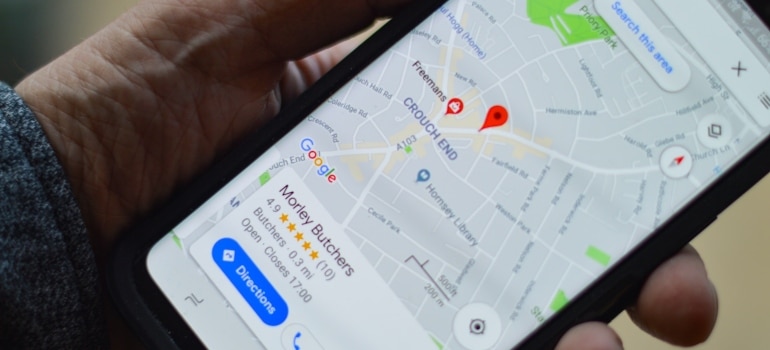
For local moves, the Google Maps pack often gets the call before any website does. Complete your Google Business Profile, add real photos of trucks and crews, choose accurate categories, and ask every satisfied customer for a review. Keep your name, address, and phone number identical on directories and citations. Professional GBP and reputation management for movers combines all of this with fast, polite replies to negative reviews, which future customers read as closely as the positive ones.
Google Ads and Local Services Ads
Where SEO is slow, pay-per-click is immediate: well-built campaigns can send calls the day ads go live. PPC for moving companies works when keywords match services you actually sell, negative keywords block job seekers and DIY truck rentals, and every ad points to a landing page that repeats the offer. Check whether your customers search on mobile Maps, mobile browsers, or desktop, and bid accordingly. Local Services Ads add a pay-per-lead placement above regular ads once Google verifies your business. Both stop the moment the budget stops.
AI search optimization
Customers increasingly ask ChatGPT, Perplexity, or Google AI Overviews “who are the best movers in [city]?” Those answers draw on the same signals as classic search: clear service pages, consistent business details, reviews, and mentions on other sites. AI search optimization for moving companies structures that information so AI tools can quote it. It is not a separate channel to fund from zero. It is an extension of strong SEO and reputation work.
Social media, organic and paid
Social media lets you show what a review cannot: the crew, the trucks, a tricky piano move, a thank-you from a customer. Pick two or three platforms you can post on consistently rather than five you abandon. Direct replies to comments and messages build trust. Paid social on Facebook and Instagram is stronger for local awareness and retargeting than for urgent quote requests. If time is the problem, see how to keep up with social media when moving operations eat your day.
Email and SMS
Email has been around for decades, but personalization and automation keep it effective. Use it for estimate follow-ups, post-move thank-you messages, review requests, seasonal reminders, and referral offers. SMS works for short, time-sensitive messages such as confirmations and crew arrival times. Both are cheap and reach people who already know you. The limit is frequency: send only what customers want to know, or your unsubscribe rate will climb.
Retargeting, geo-targeting, and geofencing
Most visitors leave the quote page without submitting. Retargeting shows them your ads afterward on Google and social platforms, so your name is in front of them when they are ready. Geo-targeting limits ads to the ZIP codes or radius you actually serve. Geofencing goes further and shows ads to people who enter a defined area, such as a busy apartment complex or a competitor’s location. Paired with a strong Google Business Profile, location-based ads keep a local mover top of mind at the decision moment.
Video and YouTube
Video builds trust faster than text. A packing tutorial, a day in the life of a crew, or a short customer testimonial answers the question every customer has: who will be in my home? YouTube offers several ad formats, and the same clips work on your website, your Google Business Profile, and social media. One planned shoot can supply months of content.
Lead aggregators
Sites such as HomeAdvisor, Angi, Moving.com, and Relocation.com sell moving leads. They are a fast source of volume for a new mover, but the same lead usually goes to several companies. You win only if you call first, ask good questions about the move, and send a clear estimate quickly. Treat aggregators as a bridge while your own channels grow. If you are just starting out, our startup mover program is built for exactly that stage.
Which Offline Ways to Advertise Your Moving Business Still Work?
Traditional marketing still has a place, especially for local movers in a defined area. Its weakness is measurement. Give every offline campaign its own phone number, landing page URL, or promo code so you can compare it to digital channels on the same terms.

Referral programs and partnerships
Personal recommendations remain the highest-trust lead a mover can get. Reward customers who refer friends, and make the ask in your post-move email. Then build partnerships with businesses that serve the same customers but do not compete with you: real estate agents, storage facilities, cleaning services, and moving supply stores. Our guide to the benefits of having a referral program explains how to structure rewards. Credibility helps here too. Memberships such as the BBB, IAM, or FIDI give partners and customers a reason to recommend you.
TV, radio, print, and billboards
Local TV and radio can make a moving company feel familiar, and a billboard on a busy route reminds people of your name while they plan a move. Print still has uses: flyers and brochures at open houses and local events, and newspaper ads timed to peak moving season. Keep designs clean, since cluttered billboards are easy to ignore, and match the branding of your website so offline and online feel like one company. Our portfolio of moving company websites shows how that consistency looks in practice. These are the highest-cost channels on the list, so test small first.

Events, sponsorships, and trade shows
Experiential marketing means meeting customers face to face: sponsoring a local team, running a booth at a home show, hosting a donation drive, or presenting at a real estate office. Its benefits are memorability, direct engagement, and a visible way to show community responsibility. Its risk is cost without follow-up. Collect names, phone numbers, and emails at every event, promote the event through your digital channels, and start local before you attend regional or national trade shows.
Inbound, Outbound, or Revenue Marketing: Which Approach Fits Movers?
Outbound marketing pushes a message to people whether they asked for it or not: TV and radio, direct mail, telemarketing, billboards. Inbound marketing pulls in people who are already looking, through SEO, content, social media, email, and reviews. For most movers, inbound carries the lead volume because it reaches people at the moment they plan a move, and it is easier to measure. Outbound still supports brand recognition in a local market. Our comparison of online vs offline movers marketing strategies goes deeper into that balance.
Revenue marketing is the next step: marketing and sales work as one team and judge every campaign by the revenue it produces. In practice, that means a closed loop. Your office staff record the lead source for every estimate, your CRM software for movers connects that source to the booked job, and marketing gets the results back. You learn which campaigns produce booked moves rather than clicks, sales understands each lead’s concerns before the call, and customers get the right information at each stage.

What Makes Marketing for Movers Hard Today?
Reaching people has never been easier. Design tools, publishing platforms, and analytics are cheap or free. The hard parts are elsewhere, and they explain why two movers with the same mover marketing budget get very different results:
- A clear value proposition. Customers need a reason to choose you: guaranteed pricing, specialty moves, or a neighborhood you know better than anyone.
- Reaching the right people, not just more people. Broad targeting wastes budget on renters calling about truck rentals and job seekers.
- Too much data, too few useful KPIs. Pick the five numbers that tie to booked jobs and ignore the rest.
- Constant platform changes. Google and Meta change algorithms and ad tools often, so movers marketing that worked last year can stall this year.
- Reputation you do not fully control. Reviews are your most persuasive marketing content, and the only way to improve them is better service plus a steady review process.
- Trust in an industry with scams. Honest, transparent messaging beats aggressive offers. The FMCSA’s Protect Your Move consumer guide tells customers to check a mover’s registration, so show your USDOT number where customers can see it.
Over-focusing on design is the quieter trap: a beautiful site that hides the phone number or the quote form loses leads. For local visibility, Google states that it ranks local results by relevance, distance, and prominence, which you can read in its guidance on improving local ranking. Every point on this list is easier with a written moving company marketing strategy and a monthly review of the numbers.
Get Help Putting Your Plan to Work
If you would rather hand the work to a moving company marketing agency than run every channel in-house, Movers Development works only with movers. Our digital marketing for moving companies covers SEO, PPC and Local Services Ads, web design, Google Business Profile management, and AI search, with plans listed on our pricing page. To see which channels your budget should fund first, request a free marketing analysis and we will review your current moving company marketing strategy, your leads, and your competitors, then send you a prioritized plan.
Frequently Asked Questions
What is the best marketing strategy for a moving company?
The best marketing strategy for a moving company combines a fast lead source with channels that compound. Pair Google Ads or Local Services Ads, which can bring calls the day they go live, with local SEO, a complete Google Business Profile, and a steady flow of reviews, which lower your cost per lead over months. Build it on a mobile-first website with an instant quote option, and judge every channel by booked moves, not clicks.
How does marketing increase revenue for a moving company?
Marketing increases revenue for a moving company in two ways: it brings more qualified estimate requests, and it raises the share of those requests that book. Tracking the lead source of every estimate in a CRM shows which campaigns produce booked jobs. You can then move budget toward them. For example, if $1,000 in ads brings $4,000 in booked revenue, that channel returns 4:1 and deserves more budget than one that produces only clicks.
What are the benefits of experiential marketing?
Experiential marketing puts a brand in front of customers face to face through events, sponsorships, trade shows, or community drives. Its main benefits are stronger engagement, a more memorable impression than a digital ad, a visible way to show community responsibility, and direct insight into what customers care about. For a moving company, it pays off only when you collect contact details at the event and promote it through digital channels.
What are the biggest modern marketing challenges for moving companies?
The biggest modern marketing challenges for moving companies are not reaching people but reaching the right ones. Movers struggle to state a clear value proposition, pick the few KPIs that tie to booked jobs, keep up with frequent Google and Meta changes, and manage online reviews they do not fully control. Earning trust in an industry known for scams is another challenge, which is why transparent pricing and a visible USDOT number matter.
Is marketing for removal companies different from marketing for movers?
Marketing for removal companies follows the same principles as marketing for movers in the US. "Removals" is simply the common term in the UK and some other markets. The channels are the same: local SEO, Google Business Profile, paid search, reviews, referrals, and email. What changes is the vocabulary customers search with, so service pages, ads, and keywords should use the terms people in your market actually type.
What marketing ideas work for a family-run moving business?
A family-run moving business should market what large competitors cannot copy: the family itself. Feature the owners and crew in photos and video, tell the story of how long the business has served the area, and show testimonials from long-term and repeat customers. Combine that with a strong Google Business Profile, a referral program for past customers, and local partnerships with real estate agents, storage facilities, and cleaning services.


