

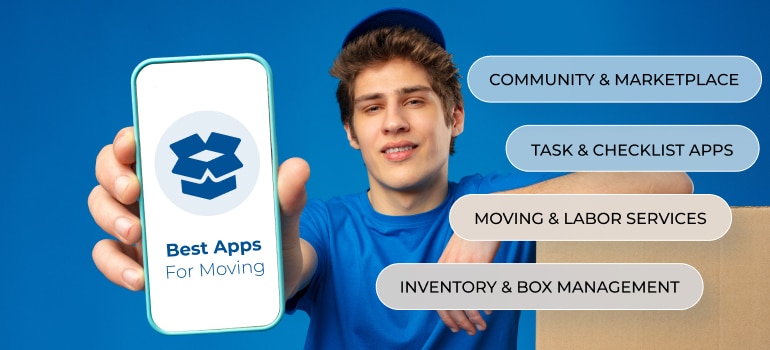
Your customers plan their move on a phone long before they call a mover. They build checklists, photograph what goes into each box, sketch where the sofa will stand, and compare movers in local marketplaces. Knowing the best apps for moving shows you what those customers expect, and picking the right moving company apps for your own office and crews shows you where the hours get lost. Movers Development works only with moving companies, so this guide sorts every tool by the job it does for a mover: apps to recommend to customers, apps to run operations, and tools that turn a mobile visit into an estimate.
Which apps for moving matter to a moving company?
Every app on this list does one of three jobs. Customer apps keep the household organized, so the crew does not arrive to half-packed rooms. Operations apps keep jobs, crews, and notes on one screen. Estimate tools give a price before the first phone call. The table maps each category to the apps worth knowing and to the action a moving company owner should take.
| Category | Apps to know | Main user | What your moving company should do |
|---|---|---|---|
| Checklists and task planning | Todoist, Notion, Evernote | Customers, office staff | Send a shareable moving checklist with every booking confirmation |
| Box inventory and labels | Sortly, Moving Boxes | Customers, packing crews | Match your box labels to the numbers or QR codes in the customer’s app |
| Floor plans and furniture layout | MagicPlan | Customers, delivery crews | Ask for the floor plan before move day so furniture lands in the right room |
| Job and crew management | ClickUp, monday.com, Todoist | Dispatch, operations managers | Track every job, crew, and deadline on one board |
| On-demand labor | TaskRabbit, Dolly | Customers with small jobs, movers in peak season | Price labor-only and single-item jobs instead of turning them away |
| Local discovery and marketplaces | Nextdoor, Thumbtack, OfferUp, Facebook Marketplace | Customers searching for movers or selling furniture | Keep profiles and reviews current, and offer downsizing help |
| Moving-day utilities | Postmates, Speedtest by Ookla | Customers in the first days at the new home | Add both to a “first night” tip sheet |
| Online estimates | Instant quote calculator on your website | Customers comparing movers on mobile | Show a price range without a phone call, then follow up fast |

What are the best apps for moving that customers already use?
Customer-facing apps matter to a mover for one reason: an organized household makes a faster, cheaper move with fewer claims. You do not need to build these tools. You need to know them well enough to recommend two or three in your booking emails and to make your process fit them. These are the categories that customers search for most, starting with planning.
Task and checklist apps
Todoist lets customers create to-do lists with deadlines and priorities and share them with family members, which works well for the weeks before a move. Notion combines documents, databases, calendars, and task boards, so a customer can keep schedules, packing lists, and design ideas in one place. Evernote stores checklists, photos, and scanned documents such as leases or utility contracts.
For a moving company, the practical move is a ready-made checklist template. Build it once in Notion or Todoist, with your own packing deadlines and the date your crew arrives, and send the share link after booking. The customer gets structure, and your company name stays on their screen until move day.

Inventory and box tracking apps
Lost or misplaced items are one of the most common sources of customer complaints, and inventory apps attack that problem directly. Sortly lets users build lists of belongings with photos, values, and categories, tag items by room or box number, and print QR codes they can scan to see a box’s contents. Moving Boxes works on the same idea: users number each box, list its contents, add photos, and later search for an item to find which box holds it.
Barcode labeling was already a selling point of moving apps back in 2017. The difference now is that customers expect it. If your packing crew labels boxes, use the same numbering the customer uses in their app, and record high-value items with photos at pickup. That one habit makes delivery checks faster and gives you a clear record if a claim comes in.

Apps for moving furniture and planning the layout
People who search for apps for moving furniture usually want one of two things: a way to plan where furniture goes, or someone to carry it. MagicPlan covers the first. It creates 2D and 3D floor plans from photos of a room, lets users measure dimensions, and supports notes and labels on the layout, so a customer can mark fragile zones, outlets, or the exact spot for a bed.
For the second need, customers turn to TaskRabbit for furniture assembly and heavy lifting, or Dolly for single-item pickups and small apartment moves. A moving company that receives a floor plan before move day can place every piece on the first try. A company that also prices single-item and assembly jobs keeps that business instead of losing it to gig apps.

Moving-day utility apps
The first night in a new home is where small apps earn their place. Postmates delivers food, groceries, and essentials from nearby stores, which helps when the kitchen is still in boxes. Speedtest by Ookla lets customers test their internet speed in different rooms once service is connected. Neither is a moving app, but a one-page “first night” sheet that names them costs you nothing and reads as care, not marketing.
Which apps should a moving company use in its own operations?
Operations-side moving company apps pay off in hours saved on dispatch, fewer missed details, and fewer calls asking “where is my crew?” In our work with 400+ moving companies, the owners who run smoothly in peak season keep every job on one shared board instead of in texts, notebooks, and memory. Generic project tools cover a lot of that; dedicated moving software covers the rest.
Job and crew management
ClickUp and monday.com let you build dashboards, manage recurring jobs, track timelines, and assign crews, which suits companies running several jobs at once. You can also invite a customer to view or approve tasks, which adds transparency on long-distance or commercial moves. Smaller teams often start with Todoist for daily crew assignments. For a full comparison of these tools in a moving context, see our guide to project management tools for relocation.
Customer notes and internal knowledge
Notion and Evernote work well as internal wikis. Store packing instructions, building access notes, elevator reservations, floor plans from MagicPlan, and customer preferences in one file per job, so the crew lead sees everything before arriving. When that information also needs to drive follow-ups and lead tracking, a CRM is the better home for it. Our breakdown of the best CRM software for movers covers which platforms handle leads, jobs, and customer history together.
Overflow labor in peak season
When your team is stretched thin in summer, TaskRabbit can supply temporary help for packing, loading, or assembly instead of forcing you to turn jobs down. Dolly is worth studying as a model: it sells speed, flexibility, and transparent pricing for small jobs. Same-day bookings or labor-only packages built on that model can compete directly with the gig platforms your customers already use.
How do estimate and quote tools change the way movers sell?
The 2017-era moving apps focused on one customer task above all: estimating how much stuff they had. They offered weight calculators, item checklists, and tools to find and review movers. That need has not gone away. It has moved to the mover’s own website, where a customer on a phone wants a price range before deciding whether to call.
An instant moving quote calculator answers that need. The customer enters move size, distance, and date, gets a price range on the spot, and your team receives a lead with the details already filled in. That replaces several rounds of calls and makes the estimate itself one of your strongest moving company apps, even though it lives on your site rather than in an app store.
Tablets cover the in-person side of estimating. Many movers search for moving company software that runs on an iPad, because estimators want to walk through a home, record inventory room by room, and send the estimate before leaving the driveway. When you compare tools, check that the estimate, the inventory list, and the CRM record stay connected, so nothing gets typed twice. The wider tech stack behind that workflow is covered in our guide to the must-have technology for modern moving companies.

Where do customers find movers through apps?
Customers also use apps to choose who moves them. Nextdoor connects neighbors with local businesses, and recommendations there carry weight because they come from people on the same street. A business profile plus a steady flow of reviews from past customers can make your company the default answer in specific neighborhoods.
Thumbtack lets people search for professionals by category, location, job type, and budget, and lets movers list services, collect reviews, and respond to requests. OfferUp and Facebook Marketplace are where customers sell furniture before downsizing, which opens the door to a downsizing or furniture removal add-on.
Every one of these platforms sends the customer to your website before they book. If the site is slow or hard to use on a phone, the lead is lost there. Professional web design and development for movers makes sure the visit from a marketplace ends in a quote request, and an up-to-date Google Business Profile and review strategy keeps the same trust signals in front of customers who search instead of scroll.
Should a moving company build its own mobile app?
Searches for a moving company app and for mover and packers app development show that many owners ask this question. The original case for going mobile still holds: customers communicate on their phones, sales teams can respond from anywhere, and a mobile presence keeps your company visible to people who will move later. What has changed is the cheapest way to get there.

For most local and regional movers, a custom app is not the first investment. A customer moves rarely, so few will install an app for a single job. The same benefits come from a mobile-first website with an instant quote, click-to-call, text updates, and the shared checklist and inventory tools described above. Google also evaluates the mobile version of your site for ranking, as explained in its mobile-first indexing documentation, so a weak mobile site costs you twice. Our guide on how responsive web design benefits your SEO explains what to fix first.
A custom app starts to make sense for large operators with repeat commercial clients, storage customers who check their units, or a crew app for internal tracking. If you are still budgeting your first year, review the startup costs for a moving company before committing to app development.
How to put moving apps to work in your business
Knowing the apps is only useful if they change what happens on a real job. These steps turn the list above into a process your office can run this month:
- Pick three customer apps, such as Todoist, Sortly, and MagicPlan, and add a short “apps that make your move easier” section to your booking confirmation.
- Build one checklist template with your own packing deadlines and share it with every new customer.
- Align your box labels with the numbering customers use in their inventory apps.
- Move dispatch onto one board in ClickUp, monday.com, or your CRM so every job, crew, and deadline is visible.
- Claim and update your Nextdoor and Thumbtack profiles, and ask satisfied customers for reviews there.
- Add an instant quote calculator to your website so mobile visitors get a price without calling.
Customers who feel organized trust the crew more and leave better reviews. That is how these tools grow your moving business beyond the move itself, and why the best apps for moving help movers as much as the people moving.

Make moving company apps part of how you win jobs
The right moving company apps give customers control, give your crews fewer surprises, and give your sales team a lead with the details already filled in. Start with the customer apps you can recommend for free, move operations onto one shared board, and let an online quote do the first round of selling. Movers Development builds mobile-first websites, instant quote calculators, and marketing campaigns for moving companies across the US, Canada, and other countries. Request a free marketing analysis and see where your current tools and website are losing leads.
Frequently Asked Questions
What is the best moving app?
There is no single best moving app, because each one solves a different part of the move. Todoist and Notion handle checklists and deadlines. Sortly and Moving Boxes let users number boxes, list their contents, and find items later. MagicPlan creates floor plans from room photos. Most households get the most value from one checklist app, one inventory app, and the moving company's own online quote tool.
Are there apps for moving furniture?
Yes. Apps for moving furniture fall into two groups. MagicPlan helps plan the layout by creating 2D and 3D floor plans from photos, with measurements and notes for each room. TaskRabbit connects users with helpers for furniture assembly and heavy lifting, and Dolly handles single-item pickups and small apartment moves. For a full household or valuable pieces, a professional moving company with its own crew and equipment is the safer choice.
What apps do moving companies use?
Moving companies typically use three kinds of apps. Project tools such as ClickUp, monday.com, and Todoist manage jobs, crews, and deadlines. Notion and Evernote store packing instructions, building access notes, and customer preferences. CRM and estimating software tracks leads and quotes. Many movers also recommend Sortly, Moving Boxes, or MagicPlan to customers and add an instant quote calculator to their website so mobile visitors get a price without calling.
Does a moving company need its own mobile app?
Most local and regional movers do not need a custom app. Customers move rarely, so few will install an app for a single job. A mobile-first website with an instant quote calculator, click-to-call, text updates, and shared checklists delivers the same benefits at a lower cost. A custom app makes more sense for large operators with repeat commercial clients, storage customers, or an internal crew-tracking need.
Can moving company software run on an iPad?
Yes, as long as the vendor supports tablets, so confirm it before you buy. A tablet lets an estimator walk through the home, record inventory room by room, take photos, and send the estimate before leaving the driveway. Check that the iPad version keeps the inventory, the estimate, and the CRM record connected, so the office does not retype anything and the crew sees the same item list on move day.
How do apps help with moving?
Apps help with moving by keeping tasks, belongings, and helpers organized in one place. Checklist apps such as Todoist set deadlines for packing and address changes. Inventory apps such as Sortly and Moving Boxes record what is in each numbered box. MagicPlan maps furniture placement in the new home, and Postmates covers meals while the kitchen is still packed. Together they reduce lost items and last-minute surprises on moving day.


