



In our work with 400+ moving companies, the sale is usually won or lost after the lead comes in, not in the ad that produced it. If you are working out how to sell moving services profitably, you need a repeatable process: a fast response, a qualifying call, a transparent estimate, calm price talks, and follow-up until the customer books. These sales strategies for moving company owners cover each step, the phone and online channels, and how to keep your sales team and your digital marketing for movers pulling in the same direction.
What does a moving company sales process look like?
A moving company sales process is the fixed path every inquiry follows, from first contact to a booked and reviewed job. Writing it down matters because most movers have more than one person answering phones, and each one sells differently. When the stages, scripts, and tools are the same for everyone, you can see where leads drop out and fix that stage instead of guessing. Use the table below as a starting template and adjust the scripts to your service area and move types.
| Stage | Goal | Script or action | Tool |
|---|---|---|---|
| 1. Lead capture | Record every inquiry and its source | Short quote form: name, email, move date, origin and destination ZIP, home size. Ask for a phone number only if you will call. | Instant quote calculator, website form, CRM |
| 2. First response | Reach the lead before a competitor does | “Hi, this is [name] from [company]. I saw your request for a move on [date]. Do you have two minutes to go over the details?” | CRM alert, phone, SMS |
| 3. Qualification | Know the job before you price it | Confirm date and flexibility, addresses, number of rooms, stairs or elevator, specialty items, packing and storage needs, and how they will decide. | CRM lead record |
| 4. Estimate | Give a price the customer can trust | Virtual or in-home survey, then a written, itemized quote that lists what is included and what costs extra. | Estimating software, video call, quote calculator |
| 5. Follow-up | Turn “I’ll think about it” into a decision | “I can hold [date] for you until [day]. What would you need to see to book with us?” | CRM tasks and reminders, email, SMS |
| 6. Booking | Lock the date | Confirm scope, date, arrival window, and payment terms in writing. | Online booking form, e-signature, deposit link |
| 7. After the move | Earn the review and the next job | Thank-you message, review request, referral offer. | Google Business Profile, email |
Stages usually fail for a simple reason: nobody owns them. Assign an owner to each row, even if it is the same person, and count how many leads move from one row to the next. That stage-to-stage ratio is your real moving company sales report, far more useful than total lead volume. For the marketing side of this path, see how to build a sales funnel for your moving business.

Who buys moving services, and what are they really buying?
Customers do not buy truck hours. They buy a date that holds, belongings that arrive intact, and a price that does not change at delivery. Most residential customers look for the same core things: fast and affordable transportation, add-on services such as packing and storage, coverage for their belongings, and packing supplies they can buy or rent. Every person on your sales team should be able to explain each of those in one plain sentence.
That is the difference between selling services and selling benefits. “We offer full packing” is a service. “You will not need to take a day off work to pack” is a benefit. Services win the price comparison; benefits win the booking and the referral. Train reps to answer every feature question with what it changes for the customer on moving day.
How do you sell B2B and commercial moves?
B2B sales for moving companies run on a longer cycle with more decision makers. An office manager, a facilities lead, and finance may all need to sign off. Map who decides, ask early about blackout dates, IT equipment, and building rules, and offer a site walk-through instead of a phone estimate. Property managers, real estate agents, and employers that relocate staff can send repeat work, so treat them as accounts with a named contact, not as one-off leads.
How to sell moving services over the phone
For most movers the phone call, or the callback after a web form, is where the job is won. The rep on that call needs three things: speed, a script, and the authority to schedule an estimate on the spot.
Respond fast and follow up consistently
Quick and consistent follow-up turns more inquiries into booked moves. Set a rule for how fast new leads get a live call during business hours, and a lead management system that alerts the right person the moment a form or call comes in. If you buy traffic through PPC management for moving companies, every unanswered call is budget you have already spent. Before you hang up on any open estimate, schedule the next follow-up in the CRM with a date and a reason. Our guide to the secret to closing more moving leads covers follow-up cadence in more detail.
Qualify before you quote
A price given before you understand the job is a guess, and customers can tell. Ask these questions on every first call:
- When are you moving, and how flexible is the date?
- Where are you moving from and to, including floor, stairs, or elevator?
- How many rooms are you moving, and is anything staying behind?
- Do you have specialty items such as a piano, safe, or artwork?
- Do you need packing, storage, or help with disassembly?
- Who else is involved in the decision, and when will you decide?
The last question tells you when to follow up and who needs to hear the pitch. A rep who knows the decision date never has to ask “did you decide yet?”
Run in-home and virtual estimates that fit the job
Every move is different, so one-size-fits-all quotes lose jobs. Use the survey, in person or over video, to tailor the plan: packing for some rooms, short-term storage between closings, or specialized handling for fragile items. Give every customer one named contact from estimate to delivery, so questions do not bounce between sales, dispatch, and the crew. Many lost estimates trace back to a few habits, from talking price before scope to skipping the follow-up, which we cover in mistakes that sales reps make in the moving industry.
How should movers price jobs and handle objections?
Start with market research: know what competitors in your area charge for the same move types, then price to the market with an edge rather than undercutting it. That edge is usually a package, such as packing plus moving, or moving plus a month of storage, that shows value instead of a lower number. The goal is not the cheapest quote; it is the quote the customer understands best. List what is included, list what costs extra, and avoid surprises on the invoice.

Most price objections repeat, so script the answers in advance:
- “Your price is higher than another quote.” Compare scope line by line: crew size, hours or weight, packing, materials, valuation coverage, and fees. The cheaper quote often leaves something out.
- “Can you do it cheaper?” Offer scope changes, not discounts: the customer packs boxes, picks a flexible date, or moves small items themselves.
- “I need to think about it.” Agree, set a specific follow-up time, and offer to hold the date until then.
- “Are there hidden fees?” Show possible extras, such as stairs, long carries, shuttles, or specialty items, on the quote itself.
- “Are you licensed and insured?” Have your license details, USDOT number for interstate work, and coverage options ready to send.
For interstate moves, federal rules shape the conversation too. Movers must give customers a written estimate and the required consumer booklet, and customers can learn the difference between binding and non-binding estimates on the FMCSA Protect Your Move guide. A rep who can explain those terms clearly sounds like the safer choice.
How do you sell moving services online?
Many customers want a number before they want a conversation. An instant quote calculator on your main pages gives visitors a moving estimate within minutes and captures their details for your sales team. Keep the quote form short: the fewer fields you ask for, the more forms get submitted. If you do not need a phone number to send the quote, do not ask for it.
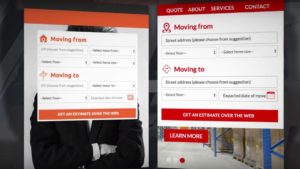
Online booking closes the loop. Let customers pick an available date, confirm scope, sign, and pay a deposit online, then confirm by phone. A moving company website that works on a phone, lists your most profitable services in the main menu, and puts the quote form above the fold does a lot of selling before a rep ever calls.
Content does the rest. Guides on packing, moving costs, and timelines answer the questions customers ask before they call, and a customer who has already read your advice arrives half-sold. To make sure that content is found by the right people, pair it with SEO services for movers.

Aligning sales and marketing
Marketing and sales for movers are two halves of one strategy with one goal: booked moves. Problems start when each side measures something different. Marketing counts leads and traffic, sales counts closed jobs, and each blames the other when the month is slow. The fix is shared rules, not more meetings:
- One goal. Both teams report on booked jobs and revenue by source, not lead volume alone.
- One system. Sales and marketing work in the same CRM, with lead source, status, and reason lost on every record. Our comparison of the best CRM software for movers can help you pick one.
- One handoff. Agree in writing what counts as a qualified lead and how fast sales must act on it, so leads marketing pays for never sit untouched.
- One calendar. Sales hears about seasonal shifts and capacity first; marketing should hear it the same week, before budgets are set.
Mismatched goals cost real money. If marketing promotes local moves while sales is pushing interstate work, both hit their own targets and the company misses its own. When a campaign moves from marketing to sales, nothing should get lost: attach a one-page brief with the offer, target move type and area, landing page, tracking number, and the person responsible for callbacks.
How do you build and measure a moving sales team?
Everyone who meets a customer sells, from the estimator to the crew lead who shows up on moving day. Train all of them to explain the benefits of hiring your company, not just list services. Give reps written scripts for the stages in the table above, review recorded calls and lost estimates every week, and ask customers what nearly made them choose someone else. Feedback from your sales team and your customers is the cheapest improvement tool you have.

Track a small set of KPIs every week, by rep and by lead source:
- Speed to lead: time from inquiry to first live contact.
- Contact rate: share of leads you actually reach.
- Estimate rate: share of contacted leads that get a survey or written quote.
- Booking rate: booked jobs divided by estimates given.
- Average job value: split by local, long distance, and commercial moves.
- Cost per booked job: channel spend divided by jobs booked from that channel.
- Reason lost: price, date, competitor, or no response.
Read the numbers as a chain. A low contact rate is a speed problem, a low booking rate is an estimate or pricing problem, and a high cost per booked job may be a targeting problem for marketing. For coaching ideas once you see the gaps, read our tips for improving moving company sales.
How do you keep selling after the move?
The cheapest next job comes from a customer you already moved. Ask happy customers to leave a review on Google, and use Google Business profile management to monitor reviews and respond to every one, positive or critical. A calm, specific reply to a bad review sells to every future customer who reads it.

Referrals need a reason. A discount on the next move or a referral bonus gives satisfied customers a push to recommend you to friends, family, and colleagues. Then stay in touch: email newsletters, seasonal promotions, and holiday greetings keep your name in mind for the next move. Customers who chose you turned down other movers, so a plain thank-you note is not enough; a small, personal gesture after the job is what turns a customer into a repeat one.
Put your moving sales process to work
Sales strategies for moving company owners only pay off when they are written down, measured, and tied to marketing: one process, one CRM, clear scripts, honest quotes, and follow-up on every lead. Movers Development works only with moving companies, on SEO, PPC, websites, and instant quote calculators that feed this process. If you want to know how to sell moving services more effectively in your market, request a free marketing analysis or contact our team today.
Frequently Asked Questions
How do you sell moving services?
Sell moving services with a repeatable process: respond to every inquiry fast, qualify the job on the first call, run an in-home or virtual survey, and send a written, itemized estimate. Then follow up on a set date until the customer books or says no. Sell benefits, such as a date that holds and no surprise fees, rather than a list of services.
How can a moving company increase sales?
A moving company increases sales by fixing the weakest stage of its sales process rather than buying more leads. Track speed to lead, contact rate, estimate rate, booking rate, and cost per booked job by source. A low contact rate points to slow response, while a low booking rate points to estimates, pricing, or follow-up. Reviews, referrals, and repeat customers add sales without new ad spend.
What is moving company sales lead management?
Moving company sales lead management means every inquiry is recorded in one CRM with its source, assigned to a rep, and moved through clear stages: first response, qualification, estimate, follow-up, and booking. Each open lead has a next task with a date. Lost leads get a recorded reason, such as price, date, or competitor, so marketing and sales can see which sources and offers actually book moves.
How do you get moving customers?
Moving customers come from search, paid ads, Google Business Profile, referrals, and repeat clients. The channel only produces customers if the sales side converts it: a short quote form or instant quote calculator on the website, a fast callback, a clear written estimate, and consistent follow-up. Ask every booked customer for a review and offer a referral reward, such as a discount on their next move.
How does B2B sales work for moving companies?
B2B sales for moving companies involve longer cycles and several decision makers, such as an office manager, a facilities lead, and finance. Movers should map who approves the job, ask early about blackout dates, IT equipment, and building rules, and offer a site walk-through instead of a phone quote. Property managers, real estate agents, and employers that relocate staff can be treated as ongoing accounts.
How do you align sales and marketing in a moving company?
Align sales and marketing in a moving company with shared rules: one goal measured in booked jobs and revenue by source, one CRM both teams use, a written definition of a qualified lead with a response deadline, and one calendar for seasonal shifts and crew capacity. Marketing should promote the move types sales is trying to book, such as local or interstate work.
How do companies make sure nothing gets lost when campaigns move between teams?
Companies keep campaigns from getting lost between teams with a written handoff for every campaign. For a moving company, that is a one-page brief listing the offer, target move type and service area, landing page, tracking phone number, and the person responsible for callbacks. Both teams then work from the same CRM, so lead status and outcomes are visible without email chains.


