


Most moving companies earn the bulk of their revenue from one job: moving boxes and furniture from one address to another. That works until a slow month, a price war or a new competitor with lower rates. Diversifying your moving company with storage, specialty moves and add-on services lets you earn more from every lead you already pay for, and gives customers fewer reasons to call someone else. Below we compare the most common options by investment, margin and buyer, then show how to launch a new service so it actually brings calls.
Which add-on services should a moving company offer first?
The right add-on is the one that reuses what you already own. Trucks, a crew trained in padding and wrapping, and warehouse space are the expensive parts of a moving business. A service that puts them to work on slow weekdays costs far less to launch than one that needs new equipment and new staff.
Market fit matters just as much. International relocation makes little sense in a town of 40,000 residents, and eviction moves rarely sell in rural areas. The table compares the options for diversifying your moving company. Margin ratings are relative to a standard local move and assume you already run trucks and a warehouse.
| Service | Investment level | Margin (relative) | Who to sell it to | How to market it |
|---|---|---|---|---|
| Packing and unpacking | Low (materials, crew training) | Medium to high | Busy families, long-distance and corporate moves | Checkbox in the quote form, offer on every estimate call |
| Packing supplies shop | Low (inventory) | Medium | DIY movers, small-load customers | Product page, pickup at the warehouse |
| Junk removal | Low to medium (disposal fees) | Medium | Downsizers, estate cleanouts | Bundle with the moving quote, own service page |
| Move-out and move-in cleaning | Low (partner or small crew) | Medium | Renters, home sellers, offices | Partner bundle, mention on the estimate |
| Outdoor storage units | Medium to high (land, fencing, security) | High over time (recurring rent, low upkeep) | Owners of boats, RVs, vehicles, equipment | “Vehicle storage” page, Business Profile service |
| Portable storage containers | Medium (containers, delivery equipment) | High once the fleet is rented | Students, renovators, customers between homes | Dedicated page, PPC on portable storage terms |
| Warehouse storage | High (building, security, staff) | High, recurring | Long-distance moves, closing-date gaps, businesses | “Move + store” bundle in one quote |
| Piano, pool table and safe moving | Medium (equipment, training) | High per job | Homeowners, schools, churches, venues | One page per item, item-specific ads |
| Art and antiques | Medium (crating, coverage) | High per job | Collectors, galleries, estate executors | Job photos, referral partners |
| Senior moves | Low to medium (more crew hours) | Medium to high | Older adults downsizing, their adult children | Senior communities, real estate agents |
| Office, industrial and FF&E installation | Medium to high (crew size, after-hours work) | Medium per job, high per contract | Office and facility managers | Commercial service page, direct outreach |
| Last-minute and small-load moves | Low (scheduling) | High per hour (premium rate) | Urgent movers, students, partial households | “Same-day” and “small move” pages, call-only ads |
Why is storage the add-on most movers start with?
Storage turns a one-time move into monthly recurring revenue. It also solves a problem moving customers run into constantly: the closing date and the move-in date rarely match. In the moving service market, transportation still brings in most of the revenue, but warehousing and storage is the next largest line, ahead of packing. There are three ways to diversify your moving and storage business, and they differ a lot in capital and in who buys. Once the service is live, our guide to marketing strategies for storage services covers how to fill the units.
Outdoor storage units for vehicles, boats and equipment
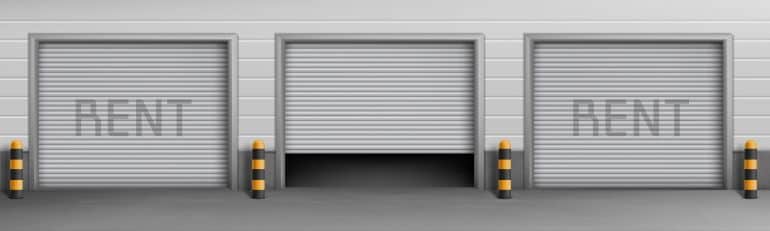
Outdoor (exterior) storage is drive-up space for items that will not fit in a 10×10 indoor unit: boats, RVs, cars, trailers, contractor equipment and machinery. The benefits of exterior storage units come down to five points:
- Accessibility. Renters drive up and load directly, which lowers the risk of damage and injury.
- Space. Large items fit in one unit instead of three, so customers do not feel upsold.
- Cost-effectiveness. Outdoor space gives the best value per square foot for you and the renter.
- Convenience. It suits collectors of vehicles and recreational equipment who need frequent access.
- Low maintenance. No climate control and fewer staff hours than an indoor facility.
Before you invest, check three things: geography (lot prices and zoning), local demand (marinas, RV owners, remodeling activity) and the cost of the land. Market the service around the customer’s problem, “storing large items” and “vehicle storage”, not around the facility.
Portable storage containers: how to start a portable storage business
Portable storage flips the model: the container goes to the customer. That convenience opens a wider service area than a fixed facility, because people rent from you even if they live farther away. You charge delivery and pickup by distance. It also reaches a different demographic: college students, renters between leases, families renovating their homes, and anyone who will pay to have storage delivered to the driveway.

To start a portable storage business you need a few containers, a yard to keep them in and a way to deliver them. Most movers already have the truck and the warehouse. Start with a handful of units, test demand, then scale. By around 12–15 containers it is a serious business line, and scaling down is as simple as pulling units from your offer. You have three entry routes: buy a franchise (brand recognition, but franchise fees), build your own brand from scratch, or add containers to an existing self-storage offer. For demand signals in this segment, see our analysis of trends in mobile storage pods.
Warehouse storage for moving customers
Warehouse storage is the most capital-heavy option: a building, security, staff and utilities. It pays when you attach it to moves you already book, such as storage between closing dates, long-distance moves with delayed delivery and businesses that need overflow space during an office move. Sell it as “move + store” in one quote, with pickup and redelivery included, so the customer never compares you with a self-storage facility on monthly price alone. Climate-controlled, short-term, long-term and pickup-and-delivery options each deserve a line on your storage page.
What are the most popular specialty moving services?
Specialty moving services are jobs that need equipment, training or coverage beyond a standard household move. They carry higher prices per job and face less competition. Customers search for them by item: “piano movers”, “art movers”, “safe movers”. That is why a specialty moving company with one page per service often outranks a generic mover for these terms. The items people most often look for specialty movers to handle are artwork, sculptures, antiques, cars, pianos and pool tables.
Piano, pool table and safe moving
Pianos, pool tables, gun safes and hot tubs need specific gear: piano boards and skids, heavy-duty dollies, stair-climbing equipment and crews who have done it before. Price these as a flat fee per item, adjusted for stairs and distance, and show the equipment in photos on the service page. Buyers want proof you will not damage the floor or the item. Schools, churches and event venues are repeat buyers for piano moves.
Art, antiques and high-value items
Artwork, sculptures and antique furniture call for custom crating, soft packing, climate-controlled transport and higher valuation coverage. The buyers are collectors, galleries, interior designers and estate executors, and they find movers through referrals as often as through Google. A portfolio of past jobs and partnerships with local galleries and auction houses do more than ads here. Explain your valuation and insurance options clearly, because it is the first question high-value customers ask.
Senior moves
Senior moves combine downsizing, sorting, packing, donation runs and setup in the new home, often coordinated with adult children who live in another city. The job takes more crew hours than a standard move of the same size, so price it by the project rather than by the hour. Partnerships with senior living communities, estate sale companies and real estate agents bring steady referrals, and the service pairs naturally with junk removal and cleaning.
Office, corporate and industrial moves
Commercial moves are fewer in number but larger in contract value. Office and facility managers ask for after-hours and weekend work, IT equipment handling, and furniture, fittings and equipment (FF&E) installation in the new space. Industrial moving, relocating a warehouse or factory floor, needs rigging and planning, but one contract can fill a slow month. For commercial moves, the extra services that close deals are labeled crate rental, workstation disassembly and reassembly, and post-move cleaning.
Military, international and last-minute moves
Military moves are regular and schedule-driven, so reliability and on-time delivery matter more than price. International relocation adds customs paperwork and long-distance logistics, and is worth offering only in markets with enough demand. Last-minute moves booked within 24–48 hours, and small-load moves for students or partial households, fill gaps in the schedule and can carry a premium rate.

Packing, junk removal and cleaning: the easiest add-ons to sell
These services need little capital and sell on the same estimate call as the move. They raise the average ticket without adding a truck. In our work with 400+ moving companies, these are also the simplest add-ons to put into an online quote form, because the customer only has to tick a box.

Packing services and a packing supplies shop
Full packing, partial packing (kitchen only, fragile items only) and unpacking cover customers who want to do nothing. A packing supplies shop covers those who pack themselves: sell boxes, tape, bubble wrap and wardrobe boxes at the warehouse or deliver them before the move. Add both as options in your instant moving quote calculator so customers price them before they call.
Junk removal before the move
With the growing popularity of minimalism and decluttering, many customers want unwanted items gone before moving day. Junk removal reduces the volume you pack and haul, lowers the customer’s total cost and turns a smaller move into a second invoice. Partner with donation centers and recycling facilities so you can tell customers where their items go.
Move-out and move-in cleaning
Renters want their deposit back and sellers want the house ready for handover. A move-out clean the day the truck leaves, or a move-in clean before it arrives, solves both. You can subcontract to a cleaning company and add a margin, or train a small crew. Debris removal after renovation and handyman services such as furniture assembly and TV mounting belong to the same group of post-move help.
How do you launch a new moving service so it brings leads?
When expanding your moving services, a new service that only appears as a bullet on your services page will not rank and will not get calls. Each service you add needs three things live in the same week: its own page, its own Google Business Profile entry and its own ad group. Then you sell it to the customers you already have.

Build a dedicated page on your website
Give every service its own URL, such as /portable-storage/ or /piano-moving/, with the service area, what is included, how pricing works, photos of real jobs and a quote form. Customers use specific, item-level phrases, as our research on how people search for movers shows. A page built for “piano movers” in your city can rank for that phrase; a generic services page cannot.
If your current site makes new service pages hard to add, website design for moving companies built around one page per service fixes that. Then support each page with SEO for movers: internal links from related posts, local keywords and reviews that mention the service.
Add the service to your Google Business Profile
Google lets you list services on your Business Profile, add a description and price to each one, and create custom services that are not in the suggested list, according to Google’s help page on managing Business Profile services. The same page warns that custom service names with prices or phone numbers are rejected automatically. Add the new service, post photos from the first jobs and ask those customers for reviews that name the service. Our Google Business Profile and reputation management team handles this setup for movers.
Run a separate PPC ad group
Put each new service in its own ad group, with its own keywords (“portable storage containers”, “piano movers near me”), ad copy and landing page. Point the ads to the dedicated page, not the homepage. That shows the cost per lead for the new service separately from your core moving campaigns, so you can cut it fast if it does not pay. Location and schedule targeting matter more for niche services because the audience is smaller. This is how we structure PPC for moving companies that add a service line.
Sell it to the customers you already have
Past and current customers are the cheapest audience for any new moving service. Mention storage on every long-distance estimate, offer packing on every booking confirmation, and follow up after the move with cleaning or junk removal. Our guide on how to upsell moving services and build long-term clients covers timing and scripts. For where add-ons fit in a wider plan to grow your moving company, see how to grow your moving business.
Start diversifying your moving company with one service
You do not need every service on this list. Pick the one that reuses your trucks, crew or warehouse, matches local demand and fits the customers you already serve. Launch it with a page, a Business Profile entry and its own ads, and measure its leads for a full season before you add the next one. Movers Development helps moving companies plan, build and market new service lines, from service pages to Google Ads. Request a free marketing analysis and get a plan for diversifying your moving company that starts with the service most likely to pay.
Frequently Asked Questions
What are common add-on services for moving companies?
The most common add-on services for moving companies are packing and unpacking, packing supplies, storage (warehouse, portable containers or outdoor units), junk removal, move-out and move-in cleaning, and specialty moves such as pianos, safes, artwork and antiques. Commercial movers also add furniture, fittings and equipment (FF&E) installation. The best add-on for a given company is the one that reuses the trucks, crews or warehouse space it already has and matches demand in its local market.
What extra services can movers provide for commercial moves?
For commercial moves, movers can offer after-hours and weekend relocations, IT and electronics handling, workstation disassembly and reassembly, labeled crate rental, furniture, fittings and equipment (FF&E) installation, short-term overflow storage, and post-move cleaning and debris removal. Industrial moves add rigging for machinery and full warehouse relocation. These services raise the contract value and make the mover the single point of contact for the office or facility manager.
How do you start a portable storage business?
To start a portable storage business you need storage containers, a yard or warehouse to keep them in, and a truck or trailer that can deliver and pick them up. Moving companies usually have the truck and warehouse already. Start with a few containers, charge delivery and pickup by distance, and scale as demand grows; at around 12–15 containers it becomes a serious business line. You can also buy a franchise or add containers to an existing self-storage offer.
What are the benefits of exterior storage units?
Exterior (outdoor) storage units give renters drive-up access, room for large items such as boats, RVs, vehicles and equipment, and better value per square foot than indoor units. For the operator, they cost less to maintain because there is no climate control and less staff time per unit. Moving and storage companies use them to serve customers whose items will not fit in a standard 10x10 indoor unit.
What is a specialty moving company?
A specialty moving company handles items that need equipment, training or coverage beyond a standard household move: pianos, pool tables, gun safes, hot tubs, artwork, sculptures, antiques and vehicles. Specialty movers use tools such as piano boards, custom crates and climate-controlled transport, and usually price per item. Many full-service movers run specialty moving services as a separate line, with one service page per item type.
How can you diversify a moving and storage business?
Diversify a moving and storage business by adding services that reuse your existing trucks, crews and warehouse: portable storage containers, outdoor vehicle storage, specialty moves, packing, junk removal and cleaning. Check local demand first. Then launch each new service with its own page on your website, a matching service on your Google Business Profile and a separate PPC ad group, so you can track leads and cost for that service alone.
Is offering self storage profitable for movers?
Self storage can be profitable for movers because it turns a one-time move into monthly recurring rent and sells to customers they already have, especially people with a gap between closing and move-in dates or a long-distance move with delayed delivery. The biggest cost is the space itself, so many movers start with portable containers or outdoor units, which need less capital than a climate-controlled indoor warehouse.


