


The coldest cities in the US shape a moving company’s year more than most owners admit. When average highs stay under freezing for three months, crews, trucks and customers all work on a different clock. This guide ranks the coldest cities in the US with NOAA’s 1991–2020 climate normals, then explains what each climate means for moving season, crew safety and the way you market. It also feeds into our wider relocation industry statistics research.
What Is the Coldest City in the US?
Among the NOAA stations compared here, the coldest city in the US is Fairbanks, Alaska: a 28.3°F annual average, a January average high of 0.6°F and a January average low of -17.2°F. Its daily high stays at or below 32°F on 154.0 days a year. The coldest place in America overall is Utqiagvik, Alaska, at 13.7°F, but it is a small community, not a typical moving market.
For the coldest major cities in the US, the strongest cases are Anchorage (37.6°F average) and, in the Lower 48, the Dakotas and northern Minnesota, led by Grand Forks (39.8°F), Duluth (40.6°F) and Fargo (42.2°F). Minneapolis, the largest metro in the set, averages 46.9°F. The table adds what movers need: how long freezing days last and what to change.
| City (NOAA station) | Climate normals, 1991–2020 | Months with avg high at or below 32°F | Tip for movers |
|---|---|---|---|
| Utqiagvik, AK (USW00027502) | 13.7°F annual avg; Jan avg high -5.2°F, avg low -17.8°F; 236.7 days with high at or below 32°F | Oct–May | Reference point for the extreme end, not a typical moving market. |
| Fairbanks, AK (USW00026411) | 28.3°F annual avg; Jan avg high 0.6°F, avg low -17.2°F; 154.0 days with high at or below 32°F | Nov–Mar | Keep heavy loading to the warmest hours; plan truck pre-warming. |
| Anchorage, AK (USW00026451) | 37.6°F annual avg; Jan avg high 22.7°F, avg low 11.0°F; 104.3 days with high at or below 32°F | Nov–Feb | Alaska’s largest city: lows stay above freezing only May–Sep, so book crews early. |
| Grand Forks, ND (USW00014916) | 39.8°F annual avg; Jan avg high 15.8°F, avg low -3.1°F; 101.3 days with high at or below 32°F | Dec–Feb | 51.1 days a year with lows at or below 0°F: build warm-break routines. |
| Duluth, MN (USW00014913) | 40.6°F annual avg; Jan avg high 19.9°F, avg low 2.4°F; 99.4 days with high at or below 32°F | Dec–Feb | Snow and ice on ramps; stock salt, mats and floor protection. |
| Williston, ND (USW00094014) | 41.7°F annual avg; Jan avg high 22.1°F, avg low 1.0°F; 79.5 days with high at or below 32°F | Dec–Feb | Big swing between winter lows and summer highs; plan two seasons. |
| Fargo, ND (USW00014914) | 42.2°F annual avg; Jan avg high 18.2°F, avg low 0.2°F; 92.7 days with high at or below 32°F | Dec–Feb | Winter jobs need cold-start and warm-up steps in the quote. |
| Marquette, MI (USW00014838) | 42.6°F annual avg; Jan avg high 24.6°F, avg low 12.4°F; 76.9 days with high at or below 32°F | Dec–Feb | Lake moderates lows; snow handling matters more than deep cold. |
| St. Cloud, MN (USW00014926) | 42.9°F annual avg; Jan avg high 20.7°F, avg low 2.9°F; 83.5 days with high at or below 32°F | Dec–Feb | Jan lows near 3°F and 8.8 days a year at 90°F+: train crews for both extremes. |
| Bismarck, ND (USW00024011) | 43.1°F annual avg; Jan avg high 23.2°F, avg low 2.4°F; 77.0 days with high at or below 32°F | Dec–Feb | Average lows stay above freezing only May–Oct: book the peak early. |
| Aberdeen, SD (USW00014929) | 44.1°F annual avg; Jan avg high 23.7°F, avg low 1.9°F; 78.0 days with high at or below 32°F | Dec–Feb | Open plains mean wind; check wind chill before outdoor loading. |
| Huron, SD (USW00014936) | 45.9°F annual avg; Jan avg high 25.8°F, avg low 6.2°F; 66.7 days with high at or below 32°F | Dec–Feb | Fewer subzero nights than other Dakota cities (27.7 days), but winter still sets the schedule. |
| Minneapolis, MN (USW00014922) | 46.9°F annual avg; Jan avg high 23.6°F, avg low 8.8°F; 72.3 days with high at or below 32°F | Dec–Feb | Largest metro in this set; keep crews trained for ice and snow. |
Source: NOAA NCEI 1991–2020 U.S. Climate Normals, station-level annual and monthly normals (station IDs shown in the first column). Temperatures in °F. Utqiagvik is listed under NOAA’s older station name, Barrow.
Which of the Coldest Cities in the US Is Hardest on Moving Crews?
Cold is not uniform. Wind, lake effect and the length of the freeze all change what a winter job looks like, so we group the cities by the problem they pose.
Fairbanks and Anchorage, Alaska

Fairbanks averages 113.8 days a year with a low at or below 0°F, and its July average high is only 72.7°F. Anchorage is milder, with a January average low of 11.0°F, but its daily high stays at or below 32°F on 104.3 days a year. In both cities the average low stays above freezing only from May through September, which squeezes the whole moving season into five months.
Grand Forks and Fargo, North Dakota
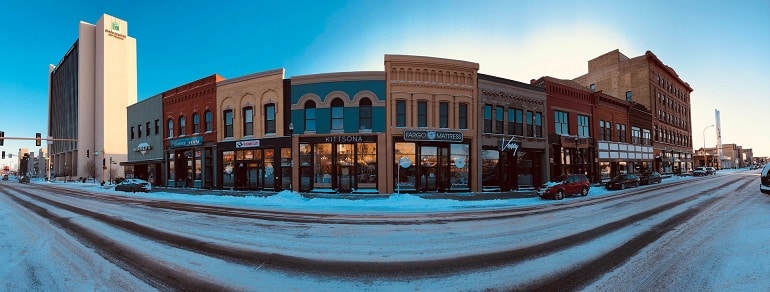
Grand Forks has the coldest average of the Lower 48 cities in the table at 39.8°F and averages 51.1 days a year with a low at or below 0°F. Fargo, North Dakota’s largest city, has 41.7 such days and a January average low of 0.2°F. Both combine long freezes with 101.3 and 92.7 days at or below 32°F, so winter moves need warm-break routines and a plan for cold-starting trucks.
Duluth and Marquette, Lake Superior
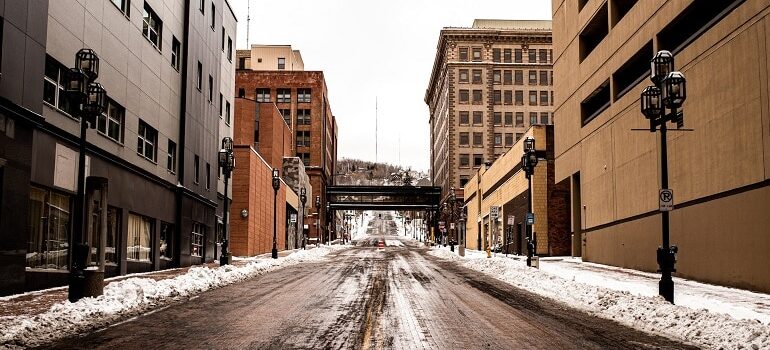
Duluth gets 31.2 inches of precipitation a year and logs 99.4 days with a high at or below 32°F. Marquette sits on the same lake but is gentler on the thermometer: a January average low of 12.4°F against 0.2°F in Fargo. For movers, lake cities are less about extreme cold and more about snow, ice on ramps and wet floors, so stock salt, mats and floor protection.
Bismarck, Williston, Aberdeen and Huron
These Dakota cities swing hard. Bismarck and Williston have January average lows of 2.4°F and 1.0°F, yet they average 20.5 and 21.4 days a year at 90°F or higher. Aberdeen has 38.5 days at or below 0°F, and Huron has 27.7, the fewest of the Dakota group. Open plains mean wind, so check the wind chill before you start outdoor loading.
St. Cloud and Minneapolis, Minnesota
St. Cloud runs from a January average low of 2.9°F to a July average high of 81.6°F, a 78.7°F spread. Minneapolis has a similar pattern with a 74.6°F spread (8.8°F to 83.4°F). Both average 8.8 and 12.5 days a year at 90°F or higher, so crews here need a heat plan as well as a cold one.
When Is the Best Time to Move in a Cold City?
Summer, almost by default. The Army’s household goods guidance from 2013 puts the summer peak season at May 15 through September 30, with almost 65 percent of Department of Defense household goods moves in it. That is a military figure, but in cold cities it lines up with the only months when overnight lows stay above freezing: May through October in Bismarck, Fargo and Marquette, and May through September in Fairbanks and Anchorage.
That compresses a year of demand into five or six months, which has three consequences for a moving company:
- Peak capacity. Hire, train and book trucks before May, using our playbook for preparing for a busy moving season.
- Winter volume. Winter is typically the quiet season in cold cities, so confirm it in your own booking data and fill it with local, commercial and storage jobs through an off-season marketing strategy.
- Winter positioning. A crew that is visibly ready for January is a selling point. Say so on your site and in ads.
How Do You Protect Crews and Belongings in Extreme Cold?
OSHA has no standalone cold-work standard, but employers must still protect workers from recognized winter hazards. OSHA’s cold stress guidance recommends scheduling heavy work for the warmest part of the day, frequent breaks in warm areas, a buddy system, warm drinks and easing new workers into cold work. It also covers the slips on ice that matter on every residential job.
Belongings need a plan too. Before a winter job, tell customers what can be damaged by freezing or cold-soaked trucks:
- Houseplants, which should travel with the customer
- Paint, aerosols and other liquids that can freeze or burst
- Electronics, which should reach room temperature before they are powered on
- Candles, cosmetics and medications
Ask customers to check manufacturer guidance for anything temperature-sensitive, and lay down floor runners and entry mats to handle slush and salt.
Are People Moving Out of the Coldest US Cities?
The national picture points south. In its Census Bureau Vintage 2025 city estimates, released May 14, 2026, the South holds 10 of the 15 fastest-growing cities, and the Census cites “domestic migration patterns favoring warm-weather destinations.” The release does not give outflow numbers for the cold cities above, so check your own lanes. Our guide to US cities with the most local moves shows where demand concentrates inside a metro.
How Can Movers Market in Cold-Weather Cities?
Winter climate gives you content that warm-city competitors cannot copy. Start with city pages that answer the real questions: can you move me in January, what do you do about ice, and how do you protect my belongings. Back them with SEO for moving companies, and shape the copy around what people in major cities want from movers.
Keep a short winter-readiness checklist on every service page, ask happy winter customers for reviews that mention the crew, and put May–September budget on the cities where your calendar fills first.
Turn Winter Into a Booking Advantage
The coldest cities in the US punish unprepared movers and reward the ones who plan. Customers can get a rough estimate through our online moving quote calculator. If you run a moving company in Fargo, Minneapolis, Duluth or Anchorage and want more bookings in both seasons, Movers Development builds SEO, ads and quote tools for moving companies. Request your free marketing analysis and we will map your two-season calendar.
Frequently Asked Questions
What is the coldest city in the US?
Among the NOAA stations compared here, Fairbanks, Alaska is the coldest city in the US, with a 28.3°F annual average and a January average low of -17.2°F, based on 1991–2020 normals. Its daily high stays at or below 32°F on 154.0 days a year. Utqiagvik, Alaska averages colder, at 13.7°F.
What are the coldest major cities in the US?
In NOAA's 1991–2020 normals, the coldest large cities are Anchorage (37.6°F annual average), then Lower 48 cities such as Grand Forks (39.8°F), Duluth (40.6°F) and Fargo (42.2°F). Minneapolis, the largest metro in the comparison, averages 46.9°F with 72.3 days a year at or below 32°F for the daily high.
What is the coldest place in America or the USA?
Among the NOAA stations checked, Utqiagvik, Alaska (listed by NOAA as Barrow) is the coldest place in America at a 13.7°F annual average, with 236.7 days a year when the high stays at or below 32°F. Fairbanks is next at 28.3°F. Both are small communities, not typical moving markets.
What are the coldest cities in the US?
By annual average temperature in NOAA's 1991–2020 normals: Fairbanks (28.3°F), Anchorage (37.6°F), Grand Forks (39.8°F), Duluth (40.6°F), Williston (41.7°F), Fargo (42.2°F), Marquette (42.6°F), St. Cloud (42.9°F), Bismarck (43.1°F), Aberdeen (44.1°F), Huron (45.9°F) and Minneapolis (46.9°F). Utqiagvik, Alaska is colder still, but it is a small community.
Which cold US city has the most subzero days?
Among the Lower 48 cities compared, Grand Forks, North Dakota, with an average of 51.1 days a year when the low is at or below 0°F, per NOAA's 1991–2020 normals. Fargo has 41.7 days, Williston 42.2 and Aberdeen 38.5. Fairbanks, Alaska has 113.8 days.


