



Every moving company owner eventually asks the same budget question: organic SEO vs PPC, which one brings more booked jobs? PPC puts your ads above the organic results as soon as a campaign is approved, while SEO builds rankings that keep producing leads after the work is paid for. For most movers the answer is a split that changes with company age, season, and service area. Below, we compare both channels criterion by criterion, show when each one wins, and explain how to measure cost per lead by channel. If you want the full picture of movers marketing, this comparison is the right place to start.
How do organic SEO and PPC differ on Google?
Search for “movers near me” or “long distance movers Brooklyn” and you will usually see three layers of results. At the top sit paid placements: Google Ads text ads and, in many US markets, Local Services Ads, which charge per lead instead of per click. Below them is the Map Pack, driven by your Google Business Profile. Then come the organic search results, the blue links Google ranks on relevance and authority.
PPC (pay per click) means you pay Google each time someone clicks your ad. Your position depends on your bid and on ad quality, and visibility stops the moment the budget runs out. Organic SEO means you earn a ranking through your website, content, reviews, and links. You pay for the work, not the clicks, so a page that reaches the first page keeps sending traffic without a per-click charge. That difference in how you pay is the core of the PPC vs organic decision.
Hiring an SEO company for movers and running paid campaigns are not competing purchases. Both target the same person: a customer with a move date who is comparing two or three companies right now.

Organic SEO vs PPC for movers at a glance
The table below compares organic search and paid search on the criteria that matter to a moving company, and shows what a combined approach looks like for each one.
| Criterion | Organic SEO | PPC (Google Ads) | Combined |
|---|---|---|---|
| Time to first leads | Typically months; Google says most SEO work needs four months to a year to show benefit | As soon as ads are approved, usually within one business day | PPC covers the ramp-up while SEO matures |
| How you pay | Monthly work (content, technical fixes, links, GBP), no per-click fee | Every click, plus management | One budget split by month and goal |
| When spending stops | Rankings and leads fade slowly | Leads stop the same day | Organic keeps a lead floor if ads pause |
| Targeting control | Limited to what you rank for | Zip codes, radius, hours, devices, services | Ads target what SEO does not rank for yet |
| Brand searches | Your site usually ranks first for your name | Competitors can bid on your name | Brand campaign protects the top spot |
| Peak season (May–September) | Fixed capacity, cannot scale overnight | Raise or cut budget daily | Scale ads for peak, rely on SEO off-season |
| New service area | New location page and GBP need time to rank | Live in the new city on day one | Ads launch the market, SEO takes it over |
| Measurement | Search Console and GA4 “Organic Search” | Google Ads conversions and GA4 “Paid Search” | Cost per lead and cost per booked job per channel |
Read the table as a timeline, not a scoreboard. PPC wins on speed and control. Organic SEO wins on cost over time and on what happens when you stop paying. The combined column is where most of our moving clients end up, because peak season and new markets always need a faster lever than SEO alone.
When should a moving company use PPC?
PPC is strongest when you need leads on a known date and cannot wait for rankings. In our work with 400+ moving companies, these are the situations where paid search earns its cost:
- A brand-new company with no rankings and no reviews needs calls this month, not next year. Ads build awareness while the site gains authority.
- A new branch or service area where your site has no local page that ranks yet.
- Peak season, when demand and competition both rise and you want to fill specific weeks.
- High-value services such as long-distance, commercial, or storage moves, where one booked job pays for many clicks.
- Organic gaps: keywords your customers search where you are not on page one. Paying for exposure there adds leads; bidding heavily on terms you already rank first for mostly buys clicks you would have received anyway.

The trade-off is cost. Each click on a competitive moving keyword can range from a few cents to several dollars, and the spend never turns into an asset. When the budget stops, the phone stops. That is why campaign structure matters as much as budget: tight geographic targeting, negative keywords for DIY and truck-rental searches, and landing pages built for one service each. Our PPC management for movers is built around exactly these controls.
When does organic SEO drive more leads?
In the organic SEO vs PPC math, SEO pays off when you plan to stay in a market for years. A service page that ranks for “local movers [city]” keeps producing calls without a per-click charge, and every new page, review, and link adds to what you already have. Over a two- or three-year horizon, that compounding is what makes organic search the cheaper channel for most established movers.
Organic results also carry trust. Some searchers scroll past anything labeled “Sponsored” and go straight to the Map Pack and the first organic listings, especially for a service that involves strangers handling their belongings. A strong Google Business Profile, recent reviews, and a fast mobile site help you win those clicks.
The organic work that moves the needle for moving companies is specific: one page per service and per city you actually serve, a Google Business Profile with correct categories and service areas, reviews that mention the type of move, and technical health so Google can crawl and index the site. That is the scope of our SEO for moving companies. If you are also weighing word of mouth, our breakdown of SEO vs referrals for movers shows which channel keeps the schedule full in slow months.
How do SEO and PPC work together for movers?
The real question behind organic search results vs PPC is how to make each channel cover the other’s weakness. Three situations come up with almost every moving company we work with.
Brand bidding: protect your own name
When someone searches your company name, they are close to booking. Competitors know this, and Google’s trademark policy generally does not stop them from bidding on your brand name as a keyword, only from using your trademark in ad text after you file a complaint. A small brand campaign keeps your ad above theirs. Brand clicks are usually cheap because your ad and landing page are the most relevant result. Keep brand and non-brand campaigns separate so brand leads do not hide the real cost of generic keywords. For more tactics, see our guide to reducing cost per lead in Google Ads.
Seasonality: scale ads, keep SEO steady
Moving demand peaks in late spring and summer and drops in winter. SEO cannot be switched up or down by the week, but a Google Ads budget can. A practical split: raise PPC budgets for the weeks you have open trucks during peak season, then cut them back in the off-season and let organic rankings carry most of the lead flow. Ad scheduling also lets you run ads only during the hours your office can answer the phone.
New locations: launch with ads, hand over to SEO
Opening a branch in a new city means zero local rankings on day one. Run a geo-targeted campaign for that city immediately, and at the same time publish a dedicated location page and verify a Google Business Profile at the new address. As the page and profile start ranking, shift budget away from the ads in that market. The search terms report from those campaigns also shows exactly which phrases local customers use, which tells you what the new location page should cover.

What does a realistic SEO and PPC timeline look like?
For a moving company starting both channels at the same time, a phased plan keeps spending under control:
- Months 1–3: Put most of the budget into PPC for immediate leads. Build the SEO foundation in parallel: technical fixes, service and location pages, Google Business Profile, and a review process.
- Months 4–6: Start reducing PPC on keywords where organic rankings reach page one. Increase content production and local SEO work.
- Month 7 and beyond: Keep a smaller, targeted PPC program (brand, peak weeks, new markets, organic gaps) and concentrate on strengthening organic search.
Expect the organic side to take longer than you want. Google’s own guidance on hiring an SEO professional states that most SEO work needs four months to a year to implement improvements and see potential benefit. Plan cash flow so PPC carries the business through that window instead of cutting SEO after month three.
This timeline is a starting point, not a rule. A mover with an established site and good rankings can skip straight to the month-seven mix, while a startup in a crowded metro may need heavier PPC for longer.
How do you measure cost per lead by channel?
The only reliable way to settle PPC vs organic search for your company is to compare cost per lead and cost per booked job, channel by channel. The formula is the same for both:
- PPC cost per lead = ad spend + management fee, divided by leads from Google Ads in the same period.
- SEO cost per lead = monthly SEO investment (agency or in-house time, content, tools), divided by leads from organic search in the same period.
- Cost per booked job = the same costs divided by jobs actually booked, which matters more than leads because PPC and organic leads often close at different rates.
Which tools show cost per lead by channel?
You need five data sources connected to one lead-source field, so every lead in your CRM can be traced back to organic or paid search.
| What to track | Where to find it | What it tells you |
|---|---|---|
| Organic clicks and queries | Google Search Console | Which searches bring organic traffic and at what position |
| Leads by channel | GA4 default channel groups “Organic Search” and “Paid Search” | How many form leads each channel produces |
| Phone leads by source | Call tracking with separate numbers per channel | Many moving leads arrive by phone; without this, both channels are undercounted |
| Ad conversions and cost | Google Ads conversion tracking | Cost per lead per campaign, brand vs non-brand |
| Booked jobs | Your CRM, tagged with lead source | Real cost per booked job and revenue per channel |
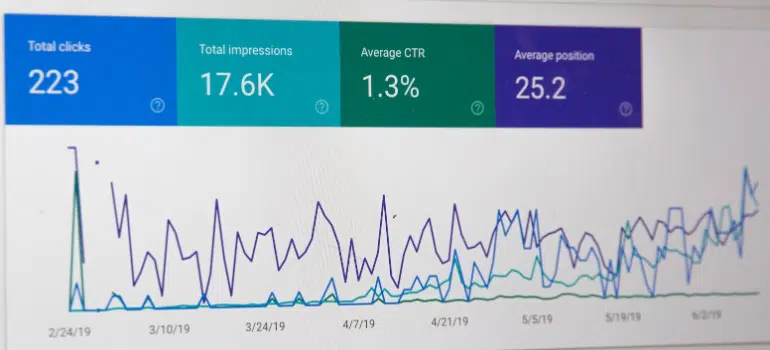
Set up conversion events in Google Analytics before you compare anything, and review click-through rate, conversion rate, and keyword rankings monthly. Keep one caveat in mind: some customers see your ad, then search your name and click the organic result. Attribution will never be perfect, so judge the channels on three to six months of data, not one week.
The SEO side of the formula is easiest when the monthly scope is fixed. Our SEO pricing plans for moving companies spell out what each plan covers, from 35 or 50 target search terms to Google Business Profile posting and technical fixes, so you know exactly what you divide by organic leads. For the wider set of channels beyond search, including directories, referrals, and partnerships, see our guide on how to generate leads for a moving company.
How do algorithm changes affect both channels?
Google changes both its organic ranking systems and its ad platform several times a year. Core updates can move organic rankings up or down overnight, and features such as AI Overviews push organic listings further down the page for some queries. On the paid side, changes to automated bidding, match types, and Local Services Ads alter what a lead costs.
This is a practical argument for running both channels. When an update hits rankings, PPC keeps leads coming while you recover. When ad costs spike, organic traffic softens the blow. Movers who want to grow their moving business steadily should follow SEO trends for movers and review campaign settings after every major Google announcement.
So which drives more leads: organic vs PPC?
For a new moving company or a new market, PPC drives more leads in the first months, simply because it is the only channel that works immediately. For an established mover planning for the next three years, organic SEO usually delivers more leads per dollar and keeps producing them when ad budgets are cut. Most companies get the best results by using PPC for moving companies where speed and control matter, and SEO everywhere else.
The organic SEO vs PPC decision gets easier once you can see your own cost per lead by channel. Movers Development manages SEO, Google Ads, and Local Services Ads exclusively for moving companies, and we can show you where your budget should go. Request a free marketing analysis and get a channel-by-channel plan for your service area.
Frequently Asked Questions
What is the difference between PPC and organic search?
PPC (pay per click) ads are paid placements: you pay Google for every click, ads appear as soon as they are approved, and visibility ends when the budget runs out. Organic search results are earned through your website content, technical health, reviews, and links. There is no per-click fee, but rankings typically take four months to a year to build, and they keep sending moving leads after the work is done.
Is organic SEO or PPC better for a moving company?
Neither wins in every situation. PPC is better when a moving company needs leads fast, for example after launching, opening a new location, or filling peak-season weeks. Organic SEO is better for long-term cost per lead, because rankings keep producing calls without paying for each click. Most established movers run both: SEO as the base lead flow and PPC for speed, brand protection, and keywords they do not rank for yet.
How do organic search results differ from PPC ads on Google?
On a search like "movers near me", PPC ads and Local Services Ads appear at the top and are labeled as sponsored. The Map Pack, driven by your Google Business Profile, follows, and organic search results come below it. Ad position depends on your bid and ad quality, while organic position depends on relevance, content, and authority. Compare your own click-through rates in Search Console and Google Ads rather than relying on averages.
Should a new moving company start with PPC or organic SEO?
A new moving company should start both, but put most of the first three months of budget into PPC, because it is the only channel that produces leads immediately. At the same time, build the organic foundation: service and city pages, a verified Google Business Profile, a review process, and technical fixes. From months four to six, reduce PPC on keywords where organic rankings reach page one.
How does PPC ad positioning work in search engine marketing?
Google Ads ranks ads with Ad Rank, which combines your bid, the quality of your ad and landing page, the Ad Rank thresholds for that auction, the context of the search, such as location and device, and the expected impact of ad assets. A moving company with a relevant ad and a fast, service-specific landing page can outrank a competitor that bids more but sends clicks to a generic homepage.


